Key Points Covered in This Guide
- How to match a wire stripper to fine-wire sizes
- Why conductor diameter and cable diameter are different
- Important blade, handle, and adjustment features
- Manual vs. automatic wire stripper comparison
- Recommended YINGSHIKE products for different applications
- How B2B buyers can evaluate samples before bulk purchasing
- Common mistakes that damage fine copper conductors
- Practical questions buyers ask before choosing a tool
Fine wires are widely used in electronics, automotive signal circuits, control systems, communication equipment, appliances, and low-voltage installations. These wires are flexible and easy to route, but their small conductors can be damaged by an incorrectly sized blade or stripping hole.
Choosing the right wire stripper is therefore not simply about finding the smallest tool. Buyers should compare conductor size, insulation material, blade precision, adjustment method, production volume, and the type of connection being prepared.
This guide explains how to choose a wire stripper for fine wires, how different designs compare, and which YINGSHIKE products may be suitable for specific working ranges.
Table of Contents
What Is a Wire Stripper for Fine Wires?

A wire stripper for fine wires is designed to remove insulation from small solid or stranded conductors without cutting, scratching, or weakening the metal underneath.
Compared with a general-purpose model, a precision wire stripper usually provides better control over blade depth, stripping diameter, and pulling force.
Precision Stripping
Precision stripping means removing the insulation while keeping the conductor intact. A suitable wire stripper should create a clean cut around the insulation without flattening or scratching the copper core.
This becomes especially important when preparing wires for small terminals, electronic connectors, solder joints, and compact control components.
Fine Wire
Fine wire generally refers to small-diameter solid or stranded conductors used where flexibility, compact size, signal transmission, or low current is required.
However, the definition varies between industries. Buyers should specify the actual AWG size, conductor diameter, cross-sectional area, and insulation material instead of relying only on the term “fine wire.”
The NIST copper wire table shows that different AWG sizes have defined conductor diameters. For example, 20 AWG copper wire is approximately 0.81 mm in diameter, while 24 AWG is approximately 0.51 mm and 30 AWG is approximately 0.25 mm. Buyers can consult the NIST copper wire reference when comparing AWG and metric sizes.
Controlled Blade Contact
A fine-wire wire stripper must cut the insulation rather than the metal conductor. Blade contact may be controlled through fixed gauge holes, an adjustment screw, a calibrated knob, or a self-adjusting mechanism.
The best wire stripper design depends on whether the operator processes one consistent wire size or frequently changes between different conductors and insulation materials.
Why Fine Wires Need the Right Wire Stripper
Fine conductors leave little room for error. A stripping hole that is slightly too small may cut copper strands, while an oversized hole may fail to remove the insulation cleanly.
A correctly matched wire stripper improves stripping consistency and helps prepare better connections.
Small Conductors Are Easier to Nick
A fine conductor contains less metal than a larger electrical cable. Even a relatively small blade mark can weaken the stripped section.
Why does a small nick matter?
The damaged area is often located where the conductor enters a terminal, connector, or solder joint. This section may later experience bending, vibration, heat, or repeated servicing.
A damaged conductor may continue working initially but fail after installation, creating an intermittent electrical problem that is difficult to locate.
Stranded Wire Requires More Care
Fine stranded wire consists of multiple small copper strands. An unsuitable wire stripper may remove several strands while still appearing to produce a usable stripped end.
After stripping, operators should inspect whether strands are missing, shortened, twisted, or spread unevenly. Visible strand loss usually means that the stripping hole or blade setting is too aggressive.
Thin Insulation Can Tear Unevenly
Fine wires may use PVC, silicone, fluoropolymer, cross-linked polyethylene, or other insulation materials.
A wire stripper that works well on soft PVC may stretch silicone or tear a harder jacket. Insulation compatibility should therefore be tested before a tool is approved for repeated production work.
Fine-Wire Sizes and Typical Applications
The following table provides a general reference for common fine-wire sizes. Actual applications depend on current, voltage, temperature, insulation, installation method, and local standards.
| Approximate Wire Size | Conductor Diameter | Common Applications | Selection Priority |
|---|---|---|---|
| 20 AWG | 0.81 mm | Control panels, appliances, automotive circuits | Accurate fixed or adjustable hole |
| 22 AWG | 0.64 mm | Sensors, relays, signal wiring | Sharp blade and low cutting pressure |
| 24 AWG | 0.51 mm | Communication equipment, electronics | Dedicated precision range |
| 26 AWG | 0.40 mm | Small connectors, PCB leads | Fine adjustment and good visibility |
| 28 AWG | 0.32 mm | Data wiring, compact electronics | Very precise blade alignment |
| 30 AWG | 0.25 mm | Prototyping, internal device wiring | Specialized electronics stripper |
| 32 AWG | 0.20 mm | Miniature electronics and fine leads | Ultra-fine stripping capability |
The table should be used as an initial reference rather than a universal purchasing standard. Buyers must verify the actual conductor and insulation specification before selecting a wire stripper.
How to Choose a Wire Stripper for Fine Wires
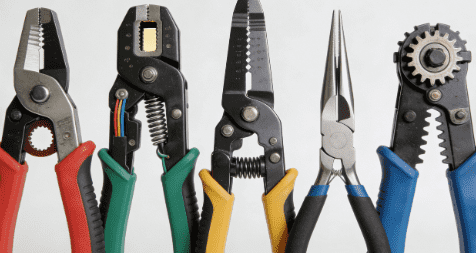
Selecting a wire stripper should begin with the cable specification rather than the appearance or number of functions on the tool.
The following factors have the greatest influence on stripping quality.
1. Confirm the Actual Conductor Size
Start with the conductor diameter, AWG size, or cross-sectional area. Do not use the outside cable diameter as the only reference.
The outside diameter includes insulation and may be significantly larger than the metal conductor. Confusing these two measurements can lead to an incorrectly sized wire stripper.
Questions to ask before purchasing
- What is the conductor’s AWG size?
- Is the wire solid or stranded?
- What is the conductor diameter?
- How thick is the insulation?
- What insulation material is used?
- What stripping length is required?
These details give buyers a more reliable basis for comparing tools.
2. Match the Stripping Range
The rated range of a wire stripper must include the wire being processed. When possible, the frequently used wire size should not sit at the extreme edge of the tool’s capacity.
A model working near its minimum or maximum limit may produce less consistent results when wire tolerances change between batches.
YINGSHIKE’s currently published folding and multifunctional models begin at 0.8 mm. Buyers working with conductors below approximately 0.8 mm should therefore verify compatibility or request a dedicated precision model before ordering.
3. Consider the Insulation Material
Different insulation materials react differently when cut and pulled. The selected wire stripper must work with both the conductor size and the jacket material.
Soft PVC insulation
Soft PVC is generally easy to strip with fixed gauge holes or an adjustable manual tool. The main risk is choosing a hole that is too small and cutting into the conductor.
Silicone insulation
Silicone is soft and flexible but can stretch during stripping. A sharp, well-aligned wire stripper is preferable because a dull edge may pull the jacket rather than separate it cleanly.
Tough and heat-resistant insulation
Fluoropolymer and cross-linked insulation can be harder to remove. These materials may require a specialized blade profile or carefully controlled cutting depth.
For bulk purchasing, samples should be tested with the actual cable materials used in production.
4. Evaluate the Adjustment System
An adjustment screw or control knob allows the operator to change blade depth or gripping pressure.
This feature is useful when the same conductor size is supplied with different insulation thicknesses. It can also help users reduce cutting pressure when processing delicate stranded conductors.
The YINGSHIKE 3-Piece Multifunctional Wire Stripper Set includes adjustable knobs and has a published stripping range of 0.8–2.6 mm. The set supports stripping, splitting, and crimping for electrical, automotive, household, and workshop applications.
5. Check Blade Alignment
The two sides of the stripping mechanism should meet evenly. Poor alignment can cut deeper into one side of the conductor while leaving insulation on the other side.
A high-quality wire stripper should open and close smoothly without excessive lateral movement.
Signs of poor blade alignment
- Insulation remains on one side
- Copper is scratched on only one side
- The wire bends during stripping
- The stripping result changes between cycles
- The jaws do not close evenly
These problems should be identified during sample testing.
6. Consider Handle Control
A comfortable handle helps operators apply pressure gradually. Sudden or excessive pressure increases the risk of cutting into small conductors.
Non-slip grips are useful during repetitive stripping, especially when operators handle short wire ends or work in warm, humid environments.
Handle thickness alone does not determine comfort. Spring tension, opening width, pivot movement, tool balance, and jaw visibility should also be considered.
7. Decide Whether Extra Functions Are Necessary
A multi-function wire stripper may combine stripping, cutting, crimping, splitting, winding, measuring, or gripping.
This can reduce the number of tools carried by electricians and field technicians. However, buyers focused on delicate bench work should prioritize stripping accuracy over the total number of functions.
Extra functions are valuable only when they do not reduce visibility, access, or control around the conductor.
Wire Stripper Type Comparison
| Wire Stripper Type | Precision | Working Speed | Best Application | Main Limitation |
| Fixed-hole manual stripper | High when correctly matched | Medium | Repeated work with known wire sizes | Incorrect hole may damage strands |
| Adjustable manual stripper | High after correct setup | Medium | Different insulation thicknesses | Requires testing and adjustment |
| Self-adjusting stripper | Medium to high | High | Repetitive production work | May need tuning for fine insulation |
| Multi-function stripper | Medium to high | Medium | Field service and mixed tasks | Larger tool head |
| Precision electronics stripper | Very high | Medium | PCB, sensors, communication and fine leads | Limited capacity for larger wire |
No single wire stripper is ideal for every application.
A field technician may prefer a portable multi-function design, while an electronics assembler may require a dedicated precision tool with a narrow but highly accurate capacity range.
Manual vs. Automatic Wire Stripper
Manual and automatic designs can both be effective for fine wires. The better option depends on production volume, wire consistency, operator experience, and required accuracy.
Manual Wire Stripper
A manual wire stripper gives the operator direct control over the blade position, pressure, and pulling movement.
It is commonly used for field repairs, short production runs, prototyping, mixed wire sizes, and maintenance work.
Main advantage
The operator can feel how the insulation responds and stop when excessive resistance occurs. This feedback is useful when working with delicate stranded wire.
Main limitation
The stripping result depends more heavily on operator skill. Repetitive use may also cause fatigue when the handle shape or spring tension is unsuitable.
Automatic Wire Stripper
An automatic wire stripper grips and removes insulation through one coordinated action.
It can increase working speed when operators repeatedly process similar wires in wiring harnesses, appliances, control panels, or electrical assemblies.
Main advantage
The mechanism reduces the number of hand movements required for each strip. It can also improve consistency when the wire and insulation remain uniform.
Main limitation
A self-adjusting tool is not automatically suitable for every fine conductor. Grip pressure, blade depth, strip length, and insulation compatibility must still be tested.
Recommended YINGSHIKE Wire Stripper Options
YINGSHIKE currently offers several stripping and multi-function plier designs. Each model has a different structure and working range.
Buyers should select products according to published capacity and confirm performance with actual cable samples.
Folding Wire Stripper for Portable Work
The YINGSHIKE Folding Wire Strippers have a published stripping range of 0.8–2.0 mm.
The design combines stripping, cutting, crimping, splitting, and winding. It folds to a compact length of 120 mm, making it suitable for mobile repair kits, tool bags, and field service.
Best suited for
- Mobile electricians
- Household maintenance
- Field service
- General wiring tasks
- Buyers needing compact storage
This wire stripper may be suitable for conductors within its published range. Wires below the minimum size should not be assumed compatible without testing.
Three-Piece Set for Workshops
The 3-Piece Multifunctional Wire Stripper Set covers a published range of 0.8–2.6 mm.
Each tool includes an adjustment knob and supports stripping, splitting, and crimping. The set format may be useful for workshops that need tools at several workstations or want to assign different settings to different wire groups.
Best suited for
- Electrical workshops
- Automotive maintenance
- Household tool sets
- Mixed stripping and crimping tasks
- Distributors offering multi-piece packages
The primary benefit is flexibility, but final approval should be based on repeated sample testing.
Multi-Hole Wire Stripper for Known Sizes
The YINGSHIKE Wire Cutters combine cutting, stripping, and crimping functions.
The model has multiple stripping holes and a published working range of 0.8–2.6 mm. Fixed holes can provide consistent positioning when operators repeatedly process known wire sizes.
Best suited for
- Repeated wire sizes
- General electrical repair
- Automotive wiring
- Workshop maintenance
- Cutting and crimping tasks
A fixed-hole wire stripper may be less suitable when the wire diameter falls between marked positions.
8-in-1 Pliers for Field Technicians
The 8-in-1 Electrician’s Pliers combine electrical measurement, stripping, cutting, splitting, winding, clamping, cable cutting, and cable opening.
The product has a published stripping range of 0.8–2.6 mm and a high-carbon steel construction.
Best suited for
- Field technicians
- Electricians
- Maintenance teams
- Mobile repair work
- Buyers prioritizing multiple functions
This product is better positioned as a versatile field tool than as a specialized ultra-fine electronics wire stripper.
What Wire Stripper Specifications Should B2B Buyers Request?
Professional buyers should evaluate more than price and appearance. A clear specification sheet makes it easier to compare samples and prevent compatibility problems after bulk production.
Supported Wire Range
Ask the supplier to provide minimum and maximum stripping capacity.
When products will be sold in several markets, request specifications in AWG, conductor diameter, and cross-sectional area where applicable.
Solid or Stranded Conductor
Specify whether the intended wire is solid, stranded, or extra-flexible.
A stranded conductor may require lower cutting pressure because individual strands are easier to damage.
Insulation Compatibility
Provide cable samples or detailed information about PVC, silicone, fluoropolymer, rubber, or cross-linked insulation.
Testing the real cable is more reliable than selecting a wire stripper from conductor size alone.
Strip-Length Control
A repeatable strip length helps operators prepare consistent wires for terminals and connectors.
Buyers should ask whether the tool includes a length stop, positioning guide, or adjustable reference.
Blade Material
Ask about blade steel, hardness, heat treatment, surface coating, corrosion resistance, and replacement options.
These factors influence blade life, maintenance requirements, and long-term purchasing cost.
Handle and Pivot Construction
The handle should support comfortable, controlled pressure. The pivot should move smoothly without excessive looseness.
For repetitive work, buyers should test whether the wire stripper causes hand fatigue after multiple cycles.
Packaging and Customization
Distributors and tool brands may also need:
- Private-label packaging
- Customized handle colors
- Logo printing
- Barcode placement
- Instruction cards
- Tool-set configurations
- Retail-ready packaging
- Export carton requirements
These details should be confirmed before sample approval and mass production.
How to Test a Wire Stripper Before Bulk Ordering
Sample testing is one of the most important steps in B2B tool purchasing.
A single successful strip is not enough to prove that a wire stripper will perform consistently in actual production.
Step 1: Prepare Representative Wire Samples
Test the smallest, largest, and most frequently processed conductors.
Include every insulation material expected in the final application.
Step 2: Perform Repeated Stripping Cycles
Use the tool for multiple cycles rather than testing only one wire.
Observe stripping consistency, hand fatigue, insulation removal, blade movement, and conductor condition.
Step 3: Inspect the Conductor
Check the stripped section for:
- Copper scratches
- Missing strands
- Flattened conductors
- Twisting
- Uneven stripping
- Remaining insulation
- Excessively stretched insulation
A magnifier can be useful for very fine conductors.
Step 4: Complete the Connection
Crimp or solder the stripped wire using the actual terminal or connector.
The completed connection helps determine whether the strip length and conductor condition are suitable for the intended assembly.
Step 5: Test the Adjustment Range
For an adjustable wire stripper, record the setting that works for each wire.
This creates a repeatable reference for operators, production supervisors, and quality inspectors.
Step 6: Compare Several Samples
When sourcing in bulk, compare different models under the same test conditions.
A consistent test method makes it easier to evaluate accuracy, comfort, speed, versatility, and overall value.
Common Wire Stripper Mistakes
Even a high-quality wire stripper may produce poor results when it is selected or used incorrectly.
The following mistakes are especially common when processing fine wires.
Using Cable Diameter Instead of Conductor Size
The outside cable measurement includes insulation. It should not be treated as the conductor diameter.
Always identify the conductor and insulation dimensions separately.
Choosing the Smallest Hole
A smaller stripping hole does not automatically create a cleaner result.
When the hole is too small, the blade may remove copper strands together with the insulation.
Pulling at an Angle
Pulling sideways can bend the conductor and force the blade deeper into one side.
Keep the wire stripper aligned with the conductor during insulation removal.
Applying Excessive Force
More pressure does not guarantee better stripping.
Excessive pressure increases the risk of conductor damage and may accelerate blade wear.
Ignoring Blade Residue
Adhesive, insulation fragments, oil, and oxidation can affect blade movement.
Clean the jaws regularly and inspect their alignment before precision work.
Using a General Cutter as a Stripper
A wire cutter may remove insulation in an emergency, but it provides limited cutting-depth control.
A correctly sized wire stripper is generally safer, faster, and more repeatable.
Wire Stripper Maintenance Tips
Regular maintenance helps preserve cutting accuracy and smooth operation.
A poorly maintained wire stripper may begin tearing insulation even when the selected size is correct.
Clean the Blades
Remove insulation particles and adhesive residue after use.
Avoid using abrasive cleaning methods that may damage the blade edge or coating.
Lubricate the Pivot
Apply a small amount of suitable lubricant to the pivot when movement becomes stiff.
Excessive oil should be removed because it may attract dust and debris.
Inspect the Cutting Edge
Check for chips, dents, corrosion, and uneven wear.
Replace a damaged wire stripper rather than compensating by applying more hand pressure.
Store the Tool in a Dry Place
Keep the tool away from moisture, chemicals, and loose metal debris.
A toolbox, pouch, or organized workshop drawer helps protect the blade and pivot.
Safety Tips for Wire Stripper Use
Electrical circuits should be de-energized whenever feasible, and workers should verify that equipment is actually de-energized before beginning work.
OSHA states that work on energized electrical parts should be limited to qualified persons using appropriate protective equipment, tools, and work practices. Review the OSHA electrical work-practice requirements before working near electrical hazards.
Inspect the Tool Before Use
Do not use a wire stripper with cracked handles, loose pivots, chipped blades, or misaligned jaws.
A damaged mechanism may slip unexpectedly.
Wear Suitable Eye Protection
Short wire pieces and insulation fragments may move suddenly during cutting and stripping.
Eye protection is especially important during repetitive workshop operations.
Keep Fingers Away From the Blades
Hold the conductor at a safe distance from the cutting area.
Never place fingers between the jaws while adjusting or cleaning the tool.
Do Not Assume the Handle Is Insulated
A plastic or rubber-coated handle is not automatically rated for live electrical work.
Check the tool’s certification, insulation classification, and voltage rating before use.
Conclusion
Choosing a wire stripper for fine wires begins with accurate information about the conductor.
AWG size, conductor diameter, strand construction, insulation material, stripping length, and production volume all influence the correct tool selection.
Manual fixed-hole models offer dependable control for known sizes. Adjustable tools provide flexibility, automatic designs support repetitive production, and multi-function products are practical for field service.
YINGSHIKE’s published 0.8–2.0 mm and 0.8–2.6 mm ranges provide useful options for general electrical and medium-fine wire applications. However, buyers processing smaller electronics wires should confirm compatibility through sample testing rather than relying on product appearance or general descriptions.
A properly matched wire stripper protects the conductor, improves connection consistency, reduces rework, and gives operators better control. For professional buyers, the most reliable selection process is straightforward: define the wire, compare the tool range, test the actual material, and approve the result before bulk ordering.
FAQ About Wire Strippers for Fine Wires
What is the best wire stripper for very thin wire?
The best wire stripper is a precision model whose rated range includes the actual conductor size and insulation material.
For very thin electronics wire, choose a dedicated precision tool rather than assuming that a general-purpose model will adjust automatically.
Can I use a 0.8 mm wire stripper on 24 AWG wire?
Not necessarily.
NIST data places the conductor diameter of 24 AWG copper wire at approximately 0.51 mm, which is below a published minimum of 0.8 mm. Buyers should confirm how the manufacturer defines the stripping range and test the actual cable before ordering.
Why does my wire stripper cut copper strands?
The stripping hole may be too small, the blade depth may be too aggressive, or the wire may be incorrectly aligned.
Dull blades and hard insulation can also increase the pressure transferred to the conductor.
Is an automatic wire stripper better for small wires?
An automatic wire stripper can improve speed during repetitive production, but it must be compatible with the wire and insulation.
For delicate, low-volume work, a manual precision model may provide better operator feedback.
How do I know whether a wire stripper fits my cable?
Check the conductor diameter, AWG size, strand construction, insulation thickness, insulation material, and rated tool range.
After that, perform repeated sample strips and inspect the conductor before approving the tool.
Which wire stripper is best for automotive signal wires?
A compact fixed-hole or adjustable wire stripper is often practical because automotive technicians work in confined spaces and process several wire sizes.
For production wiring harnesses, a tested automatic model may improve speed and consistency.
What wire stripper should I use for electronics?
Choose a dedicated precision electronics model that includes the actual conductor size.
Many general electrical tools begin around 0.8 mm and may not be suitable for smaller 24–32 AWG conductors.
Can one wire stripper handle both fine and thick wires?
Some adjustable and multi-function models cover a relatively broad range, but no tool performs equally well on every conductor.
For better results, professional workshops may keep separate tools for precision wire, general electrical wire, and larger cables.
Is a multi-function wire stripper worth buying?
It can be a practical choice for electricians, maintenance technicians, and mobile repair teams who perform stripping, cutting, and crimping tasks.
For precision electronics production, a dedicated stripping tool may offer better visibility and control.
Should distributors stock one universal model?
A universal wire stripper is useful for general-purpose sales, but it should not replace dedicated fine-wire and heavy-wire options.
A balanced product range may include a compact multi-function model, an adjustable model, a fixed-hole design, and a dedicated precision tool.
Where can buyers request specifications or samples?
Buyers can explore the complete YINGSHIKE product range or contact YINGSHIKE to discuss stripping ranges, product samples, packaging, customization, and purchasing requirements.
🔧 Let’s Stay Connected!
Thanks for reading — we’re glad you joined us on this journey through the world of professional hardware tools and innovative solutions!
Follow us on Facebook for exclusive insights, expert tips, and behind-the-scenes stories about our latest tool innovations, repair techniques, and product updates.
Let’s keep building, creating, and improving together.
Stay tuned for more guides, stories, and updates from our global tool community!