Оглавление
Введение
A flat cold chisel is one of the simplest-looking tools in a metalworking kit, yet it can perform a surprisingly wide range of cutting, shaping, separating, and removal tasks when used correctly.
Unlike woodworking chisels, a cold chisel is designed primarily for working on metal without heating the workpiece before cutting. Its hardened cutting edge concentrates the force delivered by a hammer into a relatively small area, allowing the operator to remove material, separate fasteners, cut grooves, trim metal edges, or break unwanted sections.
Understanding flat cold chisel uses is particularly important for metalworkers, machinery maintenance technicians, automotive repair professionals, construction crews, industrial workshops, and buyers assembling professional hand-tool kits.
However, successful use depends on more than simply striking the chisel with a hammer. Chisel width, cutting-edge geometry, steel hardness, hammer size, working angle, material hardness, and tool condition can all influence the result.
This guide explains where a flat cold chisel is useful, how it differs from other chisel types, how to select an appropriate size, how to use it more effectively, and what professional buyers should evaluate when choosing chisels for workshop and industrial applications.
What Is a Flat Cold Chisel?
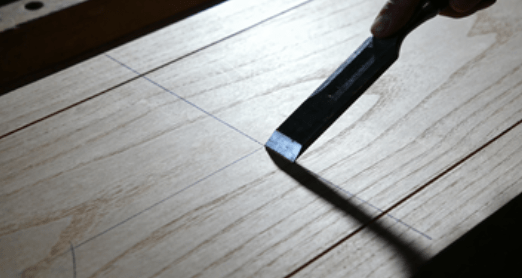
A flat cold chisel is a hand-operated cutting tool designed mainly for cutting or shaping metal at room temperature.
The tool normally consists of three basic sections:
- A hardened cutting edge
- A solid steel body or shank
- A struck head that receives hammer blows
The cutting edge is wider and flatter than those found on pointed or narrow-groove chisels.
When the user strikes the head with a suitable hammer, the force travels through the chisel body and concentrates at the cutting edge.
That concentrated force allows the edge to penetrate or deform the workpiece.
Flat cold chisels are commonly used in professional workshop environments for:
- Cutting metal
- Removing rivet heads
- Splitting seized nuts
- Trimming sheet or plate edges
- Removing weld material
- Creating grooves
- Separating metal components
- Cleaning rough surfaces
- Machinery repair
These applications make the cold chisel a useful supporting tool within broader professional hardware tool solutions, particularly where mechanical repair and metalworking are part of everyday maintenance.
Why Is It Called a Cold Chisel?
The word “cold” describes the condition of the material being worked rather than the temperature of the tool.
Traditional metalworking can involve either hot or cold material.
A hot chisel is intended for metal that has been heated during forging.
A cold chisel is designed to cut or shape metal without first heating it.
This distinction affects tool design because cold metal generally requires greater cutting resistance.
The cutting edge of a cold chisel must therefore balance hardness with toughness.
If it is too soft, the edge becomes blunt quickly.
If it is excessively hard and brittle, it may chip under repeated hammer impact.
For professional tools, material selection and heat treatment are therefore important parts of chisel performance.
Common Flat Cold Chisel Uses
A flat cold chisel can perform several different workshop tasks.
Its broad cutting edge makes it particularly useful where material needs to be removed across a relatively flat area.
Cutting Metal
Cutting metal is one of the most fundamental flat cold chisel uses.
The chisel can be used to progressively cut through suitable metal sections by placing the cutting edge along the desired line and applying controlled hammer blows.
Typical workpieces may include:
- Thin steel sections
- Sheet metal
- Small bars
- Metal straps
- Light plate
- Fastener components
A cold chisel should not automatically be considered suitable for every metal thickness or hardness.
If the workpiece is too large or hard for efficient manual cutting, another cutting method such as sawing, grinding, or machining may be more appropriate.
The purpose of a flat cold chisel is controlled manual material removal rather than replacing all powered metal-cutting equipment.
Removing Rivet Heads
Rivets can become difficult to remove during machinery repair, structural maintenance, and restoration work.
A flat cold chisel can help remove a rivet head by cutting beneath or across the exposed section.
Once the head has been separated, the remaining rivet body may be driven from the hole using another appropriate tool.
This technique is commonly associated with:
- Equipment disassembly
- Metal fabrication repair
- Structural maintenance
- Older machinery
- Automotive restoration
The chisel should be positioned carefully to avoid damaging the surrounding surface.
For precision work, the operator may first reduce part of the rivet head with another suitable tool before completing removal with the chisel.
Splitting Damaged or Seized Nuts
Corroded or damaged nuts can sometimes become impossible to remove using a wrench.
A flat cold chisel may be used to cut or split the side of the nut so it can be removed from the bolt.
This technique requires careful control because the objective is to break the nut without damaging the bolt threads or nearby components.
The chisel is generally placed against one side of the nut and struck progressively.
As the material deforms or splits, tension in the nut is reduced.
This can be useful during:
- Machinery maintenance
- Автомобильный ремонт
- Construction equipment repair
- General workshop servicing
A mechanic working with seized fasteners may therefore use a chisel alongside professional wrench and repair tool solutions rather than treating it as an isolated metalworking tool.
Removing Weld Spatter and Excess Metal
Fabrication and repair work can leave small unwanted areas of metal around a weld.
Where appropriate, a flat cold chisel can help remove:
- Weld spatter
- Small raised areas
- Slag
- Rough projections
- Unwanted metal edges
The broad edge allows controlled removal along the workpiece surface.
However, the chisel should not be driven aggressively into a finished weld whose structural integrity must be preserved.
Its purpose here is cleaning or trimming unwanted material, not indiscriminately removing the weld itself.
For critical welded components, applicable inspection and repair procedures should always be followed.
Trimming Rough Metal Edges
Cutting or fabrication processes can sometimes leave projections or rough edges.
A flat chisel may help trim localized areas where a file, grinder, or other finishing tool is inconvenient.
This can be particularly useful during:
- Field repairs
- Equipment maintenance
- Structural assembly
- Workshop modification
The chisel removes relatively large pieces compared with a file, so it is generally used before fine finishing.
A typical sequence might involve:
Cold chisel for rough removal → file or abrasive tool for refinement → inspection of the finished surface.
Using several tools in sequence often produces better results than attempting to perform the entire operation with one tool.
Creating Grooves in Metal
Although specialized cape chisels or groove chisels may provide greater control for narrow channels, a flat cold chisel can also create wider shallow grooves.
The operator progressively removes material along a marked path.
Applications may include:
- Repair work
- Surface preparation
- Component modification
- General fabrication
The width of the flat chisel directly influences groove width.
For precise narrow grooves, a specialized chisel may therefore be preferable.
Separating Metal Components
Mechanical assemblies can become difficult to separate after years of corrosion, compression, contamination, or heat cycles.
A carefully positioned flat chisel may help create initial separation between components.
Examples can include:
- Metal plates
- Old joints
- Damaged brackets
- Corroded assemblies
- Non-reusable components
This application requires particular care.
The chisel should not be forced between precision mating surfaces that need to be reused without damage.
For bearings, machined housings, sealing surfaces, or other precision assemblies, purpose-designed pullers or removal tools may be more appropriate.
Breaking Small Metal Projections
During fabrication or equipment repair, small unwanted projections can remain after cutting, welding, or component removal.
A flat cold chisel may be used to remove these projections before finishing.
Its broad edge distributes impact across a wider area than a pointed chisel, making it appropriate for relatively flat projections.
This is a good example of why chisel shape matters.
Different chisel profiles concentrate impact in different ways.
Flat Chisel vs Point Chisel
Flat and pointed chisels perform different jobs.
| Особенность | Flat Cold Chisel | Point Chisel |
|---|---|---|
| Cutting edge | Wide and flat | Narrow pointed tip |
| Force concentration | Across an edge | At a single point |
| Metal trimming | Отлично | Ограниченный |
| Surface material removal | Хороший | Localized |
| Groove starting | Хороший | Excellent for starting points |
| Rivet head removal | Suitable | Less suitable |
| Breaking localized material | Умеренный | Strong |
| Precision line cutting | Хороший | Not primary purpose |
A flat chisel is usually better when the objective is to cut or shear across a surface.
A pointed chisel concentrates force into one small area and is better when the operator needs penetration or localized breaking.
Professional workshops often keep several chisel shapes because one profile cannot perform every task efficiently.
Flat Cold Chisel vs Cape Chisel
A cape chisel has a much narrower cutting edge than a flat chisel.
It is commonly used for:
- Narrow grooves
- Keyways
- Slots
- Channels
A flat chisel is better for broader cuts and general material removal.
For example, if a machinist needs to create a relatively narrow keyway, a cape chisel provides greater control.
If the objective is to remove a damaged rivet head, trim an edge, or cut across a wider metal surface, a flat chisel is generally more practical.
The difference again demonstrates the importance of matching tool geometry to the intended result.
Flat Cold Chisel vs Masonry Chisel
A cold chisel and masonry chisel should not automatically be considered interchangeable.
Cold chisels are designed primarily for metalworking.
Masonry chisels are intended for materials such as:
- Brick
- Concrete
- Block
- Stone
Their cutting profiles and working requirements can differ significantly.
Using the correct tool improves both performance and safety.
Professional hardware buyers should therefore distinguish tool categories clearly when assembling sets for different industries.
A construction toolkit may require masonry tools, while a machine repair kit may place much greater emphasis on cold chisels, punches, wrenches, sockets, and pliers.
How to Choose a Flat Cold Chisel Width
Flat cold chisels are available in different cutting widths.
The correct size depends on the area being removed.
Narrow Chisels
A narrower flat chisel concentrates force into a smaller cutting area.
It can provide better control for:
- Small fasteners
- Localized material removal
- Restricted spaces
Wider Chisels
A wider cutting edge distributes force over a greater area.
It can be useful for:
- Trimming edges
- Removing broader projections
- Working along larger surfaces
However, a wider chisel generally requires more impact force to penetrate the same material because the load is spread across a larger edge.
The ideal width therefore depends on both workpiece size and desired material-removal rate.
Chisel Length and Working Access
Length is another important specification.
Longer chisels can improve access when the working area is recessed or when the user’s hand needs to remain farther away from the impact area.
Shorter chisels may offer better control in open bench work.
Consider:
- Working depth
- Hammer clearance
- Visibility
- Hand position
- Component geometry
A longer tool is not automatically better.
Excessive length can make precise positioning more difficult in compact bench work.
Chisel Material and Heat Treatment
Cold chisels experience repeated impact, making steel quality important.
The tool needs:
- A durable cutting edge
- Toughness through the body
- Устойчивость к деформации
- Resistance to impact cracking
This performance depends on both material and heat treatment.
Simply specifying a particular steel grade does not guarantee quality.
Professional buyers should also consider:
- Hardening process
- Умерение
- Edge consistency
- Head toughness
- Manufacturing accuracy
- Production quality control
YINGSHIKE positions its wider professional hardware tool range around construction, manufacturing, machinery maintenance, and general repair applications, where durability and stable production quality are especially important for repeatedly used hand tools.
Understanding Cold Chisel Cutting Angles
The angle of the cutting edge affects how the chisel interacts with metal.
An edge that is too thin can penetrate easily but may chip or deform quickly.
An excessively blunt edge may resist damage but require much greater hammer force.
The correct geometry depends on:
- Chisel material
- Workpiece hardness
- Tool design
- Manufacturer specifications
Users should avoid randomly grinding the edge to an extremely sharp profile.
Unlike a woodworking chisel used for slicing softer material, a cold chisel must withstand repeated impact against metal.
Its edge therefore requires sufficient supporting material behind the cutting face.
Choosing the Correct Hammer
A cold chisel is designed to be struck, but hammer selection matters.
The hammer should provide enough energy to drive the chisel without being unnecessarily heavy for the task.
A hammer that is too light may encourage repeated uncontrolled strikes.
One that is excessively heavy can make precision difficult and increase the load placed on the chisel.
The correct hammer depends on:
- Chisel size
- Workpiece material
- Required cutting depth
- User control
- Working position
The striking face should also be in safe condition.
Professional users should inspect both the hammer and chisel before starting impact work.
How to Use a Flat Cold Chisel
Correct technique improves cutting control.
Mark the Workpiece
Use an appropriate marking method to identify where material should be removed.
A clear reference line reduces unnecessary correction.
Secure the Work
The workpiece should be supported so it cannot shift unexpectedly under impact.
Position the Cutting Edge
Place the chisel where the cut should begin.
Establish the Correct Angle
Avoid holding the tool so vertically that the edge cannot move material away from the cutting zone.
At the same time, an excessively shallow angle may cause the chisel to slide across the surface.
Start With Controlled Strikes
Initial lighter strikes can establish a cutting path.
Once the chisel is stable, impact can be increased where appropriate.
Work Progressively
For a longer cut, move along the cutting line rather than attempting to remove excessive material in one strike.
Controlled repeated work generally produces cleaner results.
Why Workpiece Support Matters
A workpiece that moves during striking makes precision difficult and creates additional risk.
Whenever practical, the component should be secured using suitable workshop equipment.
Stable support helps:
- Maintain chisel position
- Improve energy transfer
- Produce cleaner cuts
- Reduce unexpected movement
The support method should not damage the workpiece or create another hazard.
For industrial maintenance performed directly on machinery, full clamping may not always be possible. In those situations, technicians should ensure the component is stable before impact work begins.
Cold Chisel Safety
Impact tools can produce flying particles if the tool or workpiece is damaged.
OSHA’s hand-tool requirements state that unsafe hand tools must not be used and specifically require impact tools such as chisels to be kept free of mushroomed heads.
Professional users can review the official OSHA hand tool requirements for further guidance.
Appropriate workplace precautions may include:
- Eye protection
- Suitable work gloves where appropriate
- Stable workpiece support
- Inspection of the chisel
- Inspection of the hammer
- Keeping nearby personnel clear of flying chips
- Using the tool only for its intended purpose
Applicable workplace procedures and local regulations should always take priority.
What Is a Mushroomed Chisel Head?
Repeated hammer blows can gradually deform the struck end of a chisel.
The steel may spread outward around the edge, creating a shape resembling the cap of a mushroom.
This condition is called mushrooming.
A mushroomed head is not merely a cosmetic problem.
Continued impacts can cause fragments to break away from the deformed metal.
OSHA specifically identifies mushroomed heads on impact tools such as chisels as a condition that should not be permitted.
Professional workshops should therefore include chisel-head inspection as part of routine hand-tool maintenance.
Why a Dull Chisel Can Be a Problem
As the cutting edge wears, the tool requires greater force to perform the same task.
Users may compensate by striking harder.
That can reduce control and increase wear on both the chisel and hammer.
Signs of edge deterioration include:
- Rounded cutting edge
- Visible chips
- Uneven geometry
- Increased cutting effort
- Chisel slipping from the work
The tool should be maintained according to the manufacturer’s instructions.
If edge restoration is permitted, correct grinding geometry and temperature control are important because excessive grinding heat can affect the steel treatment.
Do Not Use a Cold Chisel as a Screwdriver
A cold chisel and flat screwdriver may look somewhat similar at the end, but they are engineered for very different tasks.
Using a chisel as a screwdriver can damage:
- The chisel edge
- The screw
- The surrounding component
Likewise, using a screwdriver as a cold chisel exposes a tool not designed for repeated hammer impact to loads it was never intended to withstand.
OSHA guidance on hand tools highlights misuse and poor maintenance as important sources of tool hazards.
Professional workers should therefore use each hand tool for the purpose for which it was designed.
Flat Cold Chisels in Machine Repair
Machine repair is one of the most relevant professional applications for cold chisels.
Technicians may encounter:
- Seized fasteners
- Damaged metal edges
- Old rivets
- Corroded components
- Weld projections
- Metal joints requiring separation
A cold chisel can provide a simple mechanical method of material removal where powered equipment is unnecessary or cannot easily reach the area.
However, repair technicians should protect precision surfaces.
For example, a chisel should not be driven against a bearing seat, shaft surface, seal face, or precision machined interface unless the repair procedure specifically permits it.
Within YINGSHIKE’s machine repair and professional tool solutions, chisels work most effectively as part of a wider assortment that may also include sockets, wrenches, pliers, cutters, screwdrivers, and other mechanical service tools.
Flat Cold Chisels for Automotive Repair
Automotive workshops can encounter cold-chisel applications during:
- Old fastener removal
- Exhaust-system work
- Bracket repair
- Corroded assembly removal
- Rivet removal
- Body and chassis servicing
Space around vehicle components can be limited, so chisel size and length should be selected according to access.
Technicians must also consider what lies behind the part being struck.
Aggressive impact can damage:
- Wiring
- Brake components
- Sensors
- Подшипники
- Threads
- Sealing surfaces
Professional tool use therefore combines correct tool choice with awareness of the surrounding assembly.
Flat Cold Chisels for Construction and Site Maintenance
Construction and field maintenance can also involve metal components that require manual cutting or separation.
Typical situations may include:
- Metal brackets
- Damaged fasteners
- Steel straps
- Old fixtures
- Structural hardware
- Equipment repairs
Cold chisels are particularly useful because they require no electricity or compressed air.
That makes them convenient for temporary field repairs and work in locations where powered equipment is impractical.
However, manual chiseling should not replace more appropriate cutting equipment where the material is too thick or where precision is critical.
Flat Cold Chisels in Workshop Fabrication
Metal fabrication shops frequently combine manual and powered tools.
A chisel may be used when only a small amount of material needs to be removed and setting up larger machinery would be unnecessary.
Typical supporting tasks include:
- Removing small projections
- Correcting an edge
- Separating a tack
- Trimming local material
- Creating an initial groove
This is where simple hand tools continue to provide value even in workshops equipped with modern machinery.
They offer direct control and rapid access for minor corrections.
Common Flat Cold Chisel Mistakes
Several mistakes can reduce tool life and working accuracy.
Using the Wrong Chisel Type
Do not use a broad flat chisel when the job requires a narrow keyway or specialized groove.
Using a Damaged Chisel
Cracked, chipped, or heavily mushroomed tools should not remain in normal service.
Striking at an Unstable Angle
Poor positioning increases the chance of slipping.
Working on an Unsecured Component
Unexpected workpiece movement makes controlled cutting difficult.
Applying Excessive Force
If very heavy blows produce little progress, the material may be too hard or large for the selected tool.
Using the Chisel for Prying
Cold chisels are designed primarily for impact cutting.
Using them as pry bars can bend or damage the tool.
Ignoring Surrounding Components
A chisel driven through a fastener may continue into whatever lies behind it.
Always evaluate the complete working area.
Flat Chisel or Power Tool?
Professional workshops should decide whether manual chiseling is actually the most efficient method.
Choose a flat cold chisel when:
- The material removal area is small
- Access is limited
- Power tools are unnecessary
- Field portability matters
- Fine manual control is useful
Consider another cutting method when:
- Material is very thick
- Long cuts are required
- High dimensional accuracy is necessary
- Large amounts of material must be removed
- Production speed is important
A flat cold chisel is most effective as one option within a complete workshop tool system.
What Professional Buyers Should Check
When distributors, wholesalers, hardware brands, and maintenance departments source cold chisels, several characteristics deserve attention.
Steel Material
The selected alloy should support impact-tool requirements.
Термическая обработка
Proper heat treatment is essential for balancing edge hardness and overall toughness.
Режущая кромка
Inspect the edge for consistent grinding and geometry.
Chisel Body
The shank should be straight and free from obvious defects.
Striking Head
The struck end should be correctly formed and suitable for repeated hammer impact.
Поверхностная отделка
A suitable finish can help provide corrosion resistance and professional appearance.
Size Marking
Clear dimensions make workshop selection easier.
Production Consistency
Evaluate multiple production samples rather than one isolated tool.
Tool Set Compatibility
Professional buyers should consider whether chisel sizes complement the other tools included in a mechanical repair assortment.
YINGSHIKE offers more than individual hand tools; its broader professional hardware tool range is organized around industrial, construction, repair, and workshop applications, allowing buyers to build more coherent tool assortments.
Building a Practical Chisel Set
A workshop that regularly performs mechanical repair may benefit from multiple chisel profiles rather than one universal tool.
A practical set can include:
- Small flat cold chisel
- Medium flat cold chisel
- Wide flat cold chisel
- Cape chisel
- Point chisel
- Suitable punches
This allows the technician to choose the cutting geometry according to the task.
A wider selection also reduces the temptation to misuse one tool because the correct profile is unavailable.
For tool distributors and OEM buyers, this is important when developing complete maintenance kits.
Piece count should reflect useful functional coverage rather than simply maximizing the number printed on the packaging.
How to Maintain a Flat Cold Chisel
Basic maintenance can significantly extend tool life.
After use:
- Clean metal particles from the tool
- Remove moisture
- Inspect the cutting edge
- Inspect the striking head
- Check for cracks
- Check the body for bending
- Store the chisel in a dry location
Tools should not be left loose where sharp cutting edges can damage other equipment or where heavier tools can damage the chisel edge.
If a tool develops a mushroomed head, chipped edge, crack, or other unsafe condition, it should be removed from normal use until properly evaluated and corrected according to appropriate procedures.
How to Select a Flat Cold Chisel Quickly
A useful selection process can be reduced to five questions.
First, what material needs to be cut or removed?
Second, how wide is the working area?
Third, how much access is available?
Fourth, how much material needs to be removed?
Fifth, is manual impact cutting the most appropriate method?
Once these questions are answered, selecting the chisel width, length, and supporting hammer becomes much easier.
For general mechanical workshops, keeping several flat chisel sizes provides significantly more flexibility than relying on one large tool.
Заключение
Flat cold chisel uses extend across metal cutting, rivet removal, seized-fastener work, edge trimming, weld cleanup, groove formation, equipment repair, automotive servicing, construction maintenance, and general workshop fabrication.
Its effectiveness comes from a simple principle: hammer energy is concentrated through a hardened cutting edge into a controlled section of the workpiece.
However, simple construction does not mean that every cold chisel performs the same way.
Width, length, edge geometry, steel material, heat treatment, striking-head condition, and manufacturing accuracy all affect performance.
Users should match the chisel to the size and hardness of the workpiece rather than relying on excessive hammer force. They should also inspect the cutting edge and striking head regularly, secure the workpiece wherever practical, and protect themselves from chips and fragments produced during impact.
For professional buyers, chisel selection should be approached as part of a broader mechanical tool system. Different profiles and sizes provide different functions, while consistent manufacturing and appropriate material treatment help ensure stable performance over repeated workshop use.
A well-selected flat cold chisel remains one of the most straightforward and useful manual metalworking tools available—especially when the task requires localized, controlled material removal without setting up larger powered equipment.
Часто задаваемые вопросы
What is a flat cold chisel used for?
A flat cold chisel is mainly used for manually cutting, trimming, shaping, and removing metal. Common tasks include removing rivet heads, splitting seized nuts, trimming rough metal edges, removing projections, and general machinery repair.
Why is it called a cold chisel?
It is called a cold chisel because it is designed primarily to work on metal at normal temperature rather than heated metal used in forging operations.
Can a flat cold chisel cut steel?
Yes, suitable cold chisels can cut or remove material from certain steel workpieces. The effectiveness depends on steel hardness, thickness, chisel size, and tool condition.
What is the difference between a flat chisel and a point chisel?
A flat chisel uses a broad cutting edge for cutting and surface material removal. A point chisel concentrates impact at one point and is more suitable for localized penetration or breaking.
Can I use a cold chisel to remove a seized nut?
A flat cold chisel can sometimes be used to split a damaged or heavily seized nut. Care is required to avoid damaging the bolt threads or nearby components.
What causes a cold chisel head to mushroom?
Repeated hammer impacts can gradually spread the metal around the striking end of the chisel. This deformation is known as mushrooming and should be addressed because damaged impact tools may create flying fragments.
What hammer should be used with a flat cold chisel?
Hammer size should be appropriate for the chisel dimensions and workpiece. The objective is to provide controlled impact energy without using unnecessary force that reduces accuracy.
Can a cold chisel be used as a screwdriver?
No. A cold chisel and screwdriver are designed for different loads and applications. Misusing either tool can damage the tool, fastener, or workpiece and may create additional safety hazards.
How should a flat cold chisel be maintained?
Keep it clean and dry, inspect the cutting edge and striking head regularly, check for cracks or bending, and store it where its edge will not be damaged. Unsafe or heavily damaged tools should be removed from service.
What should buyers check when sourcing cold chisels?
Professional buyers should evaluate steel material, heat treatment, edge geometry, body straightness, striking-head quality, surface finish, size consistency, and production quality rather than selecting only by appearance.
Need Reliable Tools for Mechanical Repair and Metalwork?
Metalworking and mechanical maintenance require more than a single chisel. The most effective professional tool configurations combine the right cutting, gripping, fastening, striking, and repair tools around the actual tasks performed by the end user.
YINGSHIKE supplies hardware tools and configurable tool solutions for machinery maintenance, automotive repair, construction, industrial workshops, and global distribution.
For tool specifications, OEM/ODM requirements, customized repair kits, or complete hardware-tool assortments, contact YINGSHIKE to discuss a tool configuration suited to your application.